If you have ordered Quicksand and noticed a raspberry edge along the outer petals that was not there a few days later, nothing went wrong. That is the cold.
Where the rim comes from
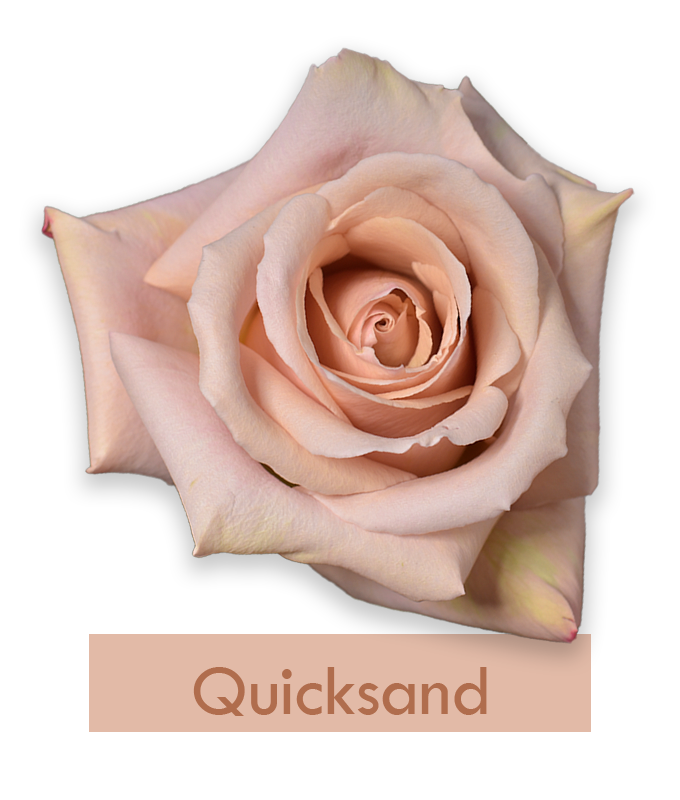
Our farm sits at 2,920 meters in Cotopaxi, Ecuador. At that altitude the nights are cold, and the cold shows up in the flower. On Quicksand it produces a raspberry rim along the edge of the outer petals.
“El frío hace que se presente esos bordes rojizos en esta variedad.”
The cold is what brings out those reddish edges on this variety.
Ing. Juan Carlos Guayaquil, Production Engineer, Evergreen Rose Farm
He runs production at the farm, so this is not a guess about why it happens. It is the person who grows the crop telling you what the crop does.
It is a stage, not a permanent mark
You see the rim at cut point. As the flower opens, the rim softens and Quicksand settles into the clean sand neutral it is known for.
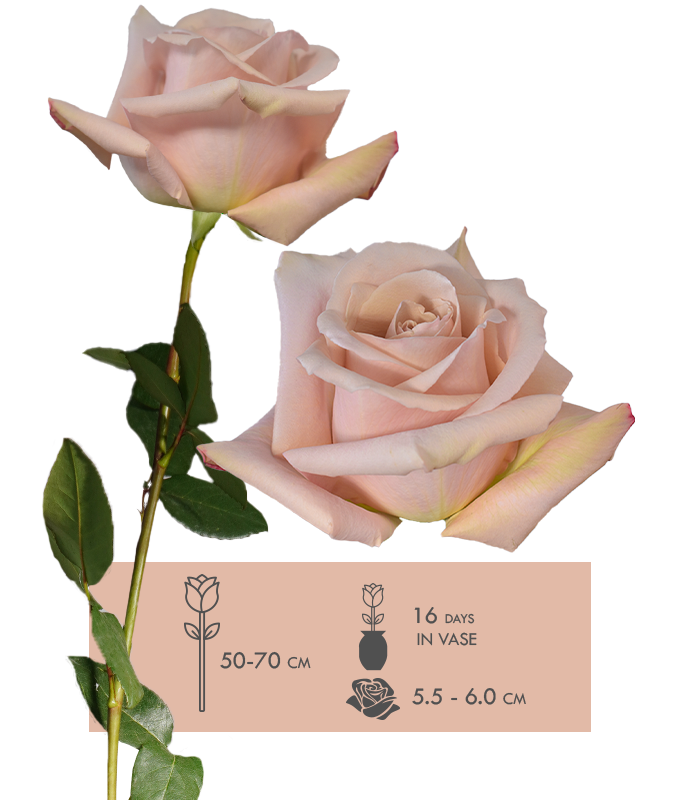
Both halves of that matter. If you have only ever been shown the rim, you might expect it to hold. It does not, and it was never meant to.
What you can do with it
Cut tight for the edge. Let it open for the neutral.
For an event designer, that is a choice rather than a surprise. A nude palette with a warm raspberry lift reads differently from a clean sand palette, and the same variety gives you both depending on when it is cut and how far it travels. Tell us which one you want when you order.
Why we are telling you this
A broker can tell you what a rose looks like in a photograph. A grower can tell you what it is going to do in your cooler.
Quicksand is available year-round from our farm in Cotopaxi. Tell us what you buy and we will come back with availability and a quote.